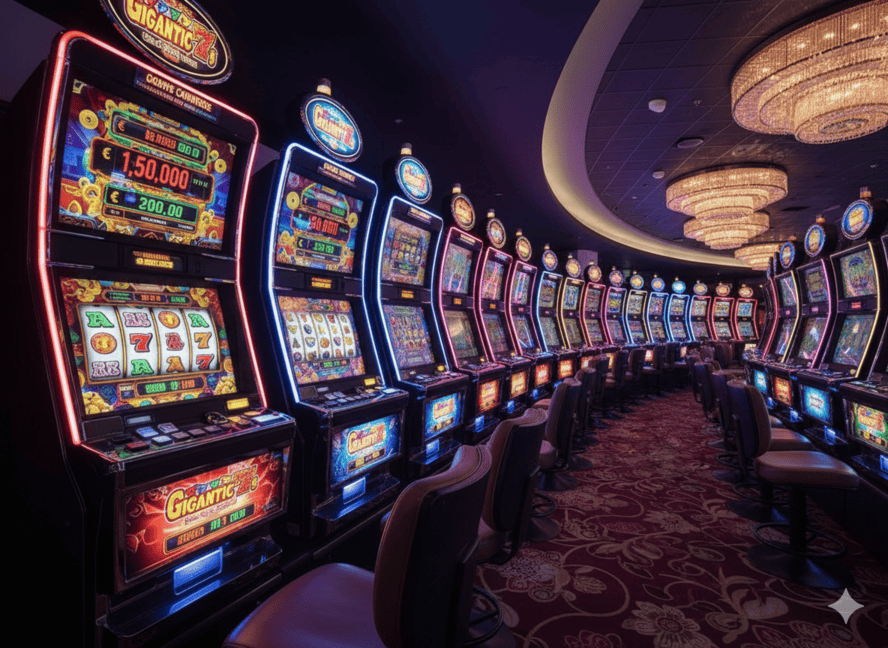
Skill-Based Slots: Where Strategy Meets Luck
I have stood at the precipice of the digital gambling revolution for over a decade, watching as the flickering mechanical drums of the past have morphed into the cinematic, multi-sensory experiences we offer today. As a representative of the industry, I have seen every trend, from the explosion of mobile play to the arrival of live dealer suites, but nothing is quite as transformative as the current shift toward agency and player influence. For years, the fundamental premise of casino games was rooted in a passive surrender to fate, where the player clicked a button and waited for a Random Number Generator (RNG) to decide their destiny. However, in 2026, the walls between traditional video gaming and gambling are dissolving, giving rise to skill-based slots where your reflexes, your decision-making, and your tactical prowess can finally tilt the scales of probability in your favor. This is no longer just about the luck of the draw; it is about the mastery of the mechanic.
In this exhaustive exploration, I will take you behind the scenes of our development labs and regulatory discussions to explain how these hybrid machines function. We will dissect the mathematical friction between “guaranteed” payouts and “earned” rewards, investigate the genres currently dominating the market, and discuss why the next generation of players is demanding a seat at the table of their own destiny. My goal is to provide an expert perspective on why skill-based slots are not just a passing fad, but the future of the entire iGaming ecosystem.
The Evolution of Player Agency: From Passive to Proactive
To understand where we are going, we must first acknowledge the stagnation that characterized the previous era. Traditional slots were masterpieces of psychological engineering, using variable ratio reinforcement schedules to keep players engaged. While effective, this model relied on a player who was content with being a spectator to their own luck. The “Spin” button was the only point of contact.
The Generational Shift in Gambling Habits
The rise of Millennials and Generation Z has forced us to rethink this entire philosophy. These cohorts did not grow up in smoky physical casinos; they grew up with PlayStation, Xbox, and high-intensity mobile games. To them, a game that offers no opportunity for improvement or mastery feels hollow and unearned. They crave “agency,” the feeling that their input matters. In our internal research, we found that younger players would rather have a lower theoretical Return to Player (RTP) that they can improve through skill than a higher RTP where they are powerless. This realization has changed the way my team curates our game library.
The Death of the Passive Spin
We are witnessing the slow sunset of the “dead spin.” In traditional slots, you either win or you lose. In skill-based hybrids, the transition between the base game and the bonus feature is where the gameplay truly begins. We are moving toward an era where the base game serves as a narrative build-up to a skill-based climax. This transition keeps the adrenaline levels consistent and reduces the “fatigue” that often comes from watching reels spin for hours without a significant event.
How Skill-Based Slots Actually Function: The Secret Math
A common misconception among players is that skill-based slots are “unregulated” or that the house has no edge. This could not be further from the truth. As an operator, I must adhere to strict mathematical and legal frameworks to ensure the house remains profitable while providing a fair experience.
The Mathematical Framework: Guaranteed vs. Incremental RTP
In 2026, the “Golden Standard” for skill-based slots is the dual-RTP model. Every machine has a “Base RTP,” which is the percentage a player is guaranteed to win if they have zero skill. For example, if you simply close your eyes during a shooting-gallery bonus round, the game might still return 88 percent of your wagers over time. This ensures that even the most casual player is not wiped out instantly.
The “Incremental RTP” is where the magic happens. By performing well in the skill-based sections, a player can push that RTP from 88 percent up to 98 percent or even 99 percent. This 10 percent gap is the “Skill Premium.” It is the reward for your talent. From a casino’s perspective, this is a brilliant compromise: it allows us to maintain a small, predictable edge while giving the player a tangible reason to practice and return.
The Role of the RNG in Hybrid Games
It is important to understand that the RNG has not been discarded; it has been redirected. In a traditional slot, the RNG determines the final outcome of the spin. In a skill-based slot, the RNG often determines the “potential” of the round. For instance, the RNG might decide that this specific bonus round has a maximum payout of $500. Your skill then determines how much of that $500 you actually capture. If you miss half the targets in the mini-game, you might only walk away with $250. This “Probabilistic Ceiling” is how we satisfy regulators while still offering a genuine challenge to the player.
Popular Mechanics and Genres in 2026
The variety of skill-based slots available today is staggering. We have moved far beyond simple “Pick-Em” games to complex simulations that would not look out of place on a professional gaming circuit.
The Arcade Shooter Hybrid
One of the most popular genres in our current lobby is the arcade shooter. Imagine a classic “Space Invaders” or “Galaga” interface. Your bets represent your “ammunition” or your “lives.” As you destroy enemy ships, you collect coin values. The more accurate your aim and the better your movement, the higher your payout. These games are a masterclass in “flow state” engineering. Players become so immersed in the mechanical challenge that they often forget they are gambling. This high level of engagement is what makes these titles the top performers in terms of session length.
Match-3 and Puzzle Strategy
Influenced by the global success of titles like Candy Crush, match-3 slots have become a staple for the “casual-pro” demographic. In these games, you are not just matching symbols for a win; you are strategically clearing the board to trigger massive cascades and multipliers. Some versions allow you to “hold” certain tiles or swap positions a limited number of times. Each decision you make influences the volatility of the round. Should you take a small, safe win now, or risk the board state for a potential 500x chain reaction? This is where strategy meets luck in its purest form.
Precision-Based Racing Games
Racing slots are the newest addition to our portfolio. In these games, the “Bonus Round” is a high-speed chase or a lap around a track. Your payout is determined by your finishing position. You must manage your fuel, choose the right racing line, and use your “boosts” at the optimal time. These games require a level of hand-eye coordination that was previously unheard of in the casino world. They attract a competitive audience that enjoys the thrill of the leaderboard, as we often link these games to daily or weekly tournaments where the best drivers win extra prizes.
The Strategy Part: What Can Players Actually Do?
Many players ask me, “If the house always has an edge, can I really have a strategy?” My answer is always yes, but it is not the kind of strategy you use in Blackjack. It is a more holistic approach to the game.
Mastering the Mini-Game Mechanics
The first step in any skill-based strategy is practice. Most of our games offer a “Demo Mode” where you can play without risking real money. Use this time to learn the physics of the shooter or the patterns of the puzzle. In a skill-based slot, knowledge of the mechanics is literally money in the bank. If you can increase your accuracy by even 5 percent, you are significantly narrowing the house edge over the long term.
Bankroll Management in Hybrid Environments
Volatility management is different in these games. In a standard slot, the volatility is fixed. In a skill-based slot, you control the volatility through your performance. If you are having an “off day” and your reflexes are slow, it is time to walk away. Unlike a lucky streak in a traditional slot, a “skill streak” can be influenced by your physical and mental state. Are you tired? Have you had a drink? These factors will affect your payout in a skill-based game more than in any other category. A professional player treats their session like an athlete treats a game: they only play when they are at their peak.
Resource Allocation Strategy
Many hybrid games involve “resource management.” You might have a limited number of “Special Attacks” or “Shields” to use during a bonus round. A common mistake I see is players using these resources too early or during low-value rounds. A savvy player saves their “power-ups” for the rounds where the potential multipliers are at their highest. This is the “Luck-Skill Intersection”: the RNG provides the opportunity (a high-multiplier round), and the player provides the execution (the strategic use of resources to capture that multiplier).
The Regulatory Landscape and Fairness in 2026
Operating skill-based slots is a legal tightrope walk. Regulators are rightfully concerned about ensuring these games do not become “predatory” or lose their identity as gambling products.
Ensuring Compliance with Local Laws
In Canada, for example, the definition of a “slot machine” is strictly tied to the concept of chance. To maintain our licenses, we must prove that luck still plays a “material role” in the outcome. If a game were 100 percent skill, it would be classified as a sport or a contest, not a casino game. This would subject us to entirely different sets of laws and tax codes.
Our developers use “Dynamic Difficulty Adjustment” (DDA) to keep the games compliant. DDA ensures that a world-class gamer cannot simply “break” the machine and win 100 percent of the time. The game subtly adjusts its difficulty to ensure the house edge is maintained within a certain range. However, we are required to be transparent about this. The player must always know that they are playing against a machine that has the final word.
The Transparency Revolution
By 2026, we have moved toward what I call “Glass Box” transparency. Every skill-based slot on our platform includes a “Strategy Breakdown” in the help menu. We show you the exact difference in RTP between “Novice” and “Expert” play. This honesty builds an immense amount of trust. Players feel that we are not trying to hide the math; we are inviting them to beat it. This level of openness has done more for our brand reputation than any marketing campaign ever could.
The Social Aspect: Leaderboards and Community
Skill-based slots have fundamentally changed the social dynamic of the online casino. In the past, gambling was a solitary activity. Today, it is a competitive community event.
The Rise of the Skill-Based Tournament
We now host “Skill Marathons” where players compete for a shared prize pool. These are not based on who bets the most, but on who achieves the highest score in the skill-based sections. I have watched our live chat rooms during these events, and the energy is electric. Players share tips, complain about difficult levels, and cheer each other on. This “Social Cohesion” is a powerful retention tool. A player might come for the game, but they stay for the community.
Virtual Avatars and Status Symbols
In 2026, your “Player Identity” is everything. Our platform allows you to customize your avatar and display your “Skill Rank” across different genres. If you are a “Grandmaster” in arcade shooters, other players will see that icon next to your name at the tables. This introduces an element of prestige that was previously missing from slots. It turns a “Big Win” from a moment of random luck into a badge of honor and a testament to your ability.
The Future: VR, Haptics, and Beyond
As we look toward the end of the decade, the integration of hardware and software will only deepen. We are already seeing the first generation of VR-integrated skill-based slots.
Total Sensory Immersion
Imagine putting on a VR headset and being transported into a high-stakes dogfight in space. You aren’t just clicking a mouse; you are physically maneuvering your ship and aiming with your eyes. The “Haptic Feedback” in your controllers allows you to feel every hit and every explosion. This level of immersion will make the “Strategy meets Luck” debate even more intense. In VR, the “Skill” part feels 100 percent real, making the “Luck” part (the RNG potential) almost invisible to the human brain.
The Role of AI in Scaling Difficulty
Artificial Intelligence will play a massive role in the future of these games. Instead of static difficulty levels, our future AI will learn your specific playstyle and create a “Dynamic Opponent” just for you. If you are getting too good, the AI will throw new challenges your way to keep the house edge secure. If you are struggling, the AI might simplify the mechanics to ensure you still have a fair chance at the Incremental RTP. This “Personalized Difficulty” will ensure that every player, regardless of their background, feels that the game is “challenging but fair.”
Why the Industry Needs Skill-Based Slots to Survive
From my perspective as an operator, the move toward skill is a matter of survival. The old model of “passive gambling” is slowly dying alongside its original audience.
Attracting the “Gamer” Demographic
There is a massive population of adults who spend billions on video games but have never stepped foot in a casino. These people are not attracted to the “boring” mechanics of a traditional slot. They want to be challenged. They want to compete. By offering skill-based hybrids, we are expanding our “Total Addressable Market” to include the gaming generation. We are not just stealing market share from other casinos; we are stealing it from the video game industry itself.
Longevity and Brand Loyalty
A skill-based player is a loyal player. If you spend three months mastering a specific racing slot, you are unlikely to switch to a competitor’s site that doesn’t offer that game. The “Skill Investment” acts as a form of lock-in. We have found that the “Churn Rate” (the speed at which players leave a platform) is 40 percent lower for skill-based slots compared to traditional ones. We are building a relationship with the player based on mutual respect for talent, rather than just a hope for a random jackpot.
Common Pitfalls and How to Avoid Them
As an expert, I would be remiss if I didn’t warn you about the dangers of these new games. Skill-based slots are not a “cheat code” for winning money.
The Illusion of Control
This is the biggest psychological risk. Because you are physically involved in the game, it is easy to believe that you have more control than you actually do. Never forget that the “Incremental RTP” has a ceiling. You can be the best gamer in the world, but if the RNG has set a low potential for that round, you cannot “skill” your way to a million dollars. Always maintain a sense of perspective and remember that at the end of the day, it is still a form of gambling.
Chasing the Skill Gap
I have seen players spend thousands of dollars trying to “level up” their skills, convinced that once they reach a certain rank, they will be consistently profitable. This is a dangerous mindset. The house edge is designed to absorb the skill of even the top 1 percent of players. Play because you enjoy the challenge and the immersion, not because you think you can “beat” the system. The “house” always has the last laugh, even in a world of strategy.
Expert Summary: Your Skill-Based Checklist
Before you dive into your first hybrid session, I suggest you follow this professional checklist:
- Read the RTP Breakdown: Know exactly how much of the payout is tied to luck and how much to skill.
- Practice in Demo Mode: Never spend real money on a mechanic you haven’t mastered for free.
- Check your Physical State: Don’t play precision-based games if you are tired, stressed, or intoxicated.
- Set a “Resource Limit”: Decide beforehand how many “power-ups” or “lives” you are willing to buy.
- Look for Leaderboard Value: Sometimes the biggest rewards are in the tournament prizes, not the game itself.
Conclusion: The New Frontier of Fun
The arrival of skill-based slots marks the beginning of the most exciting chapter in the history of the online casino. We have moved beyond the age of the “one-armed bandit” and into the age of the “digital athlete.” This fusion of strategy and luck provides a level of depth, engagement, and social connection that was previously unimaginable.
As a representative of this industry, I am proud of the work we have done to create these worlds. We have listened to the next generation of players and built a platform that respects their intelligence and their talent. Whether you are aiming at alien ships, matching colorful jewels, or racing around a virtual track, remember that you are participating in a masterpiece of modern engineering.
The virtual doors are open, and the challenge is waiting. Take your seat, trust your reflexes, but never forget the math. In the world of skill-based slots, the power is finally in your hands, but the house edge is always watching. Play smart, stay disciplined, and enjoy the incredible thrill of being the master of your own Gaming destiny.
Thank you for being part of this journey with us. We will continue to innovate, to push the boundaries of technology, and to ensure that our lobby remains a place where the best players in the world come to test their mettle. The next spin is not just a spin; it is a move in a high-stakes game of strategy. Are you ready to play?


